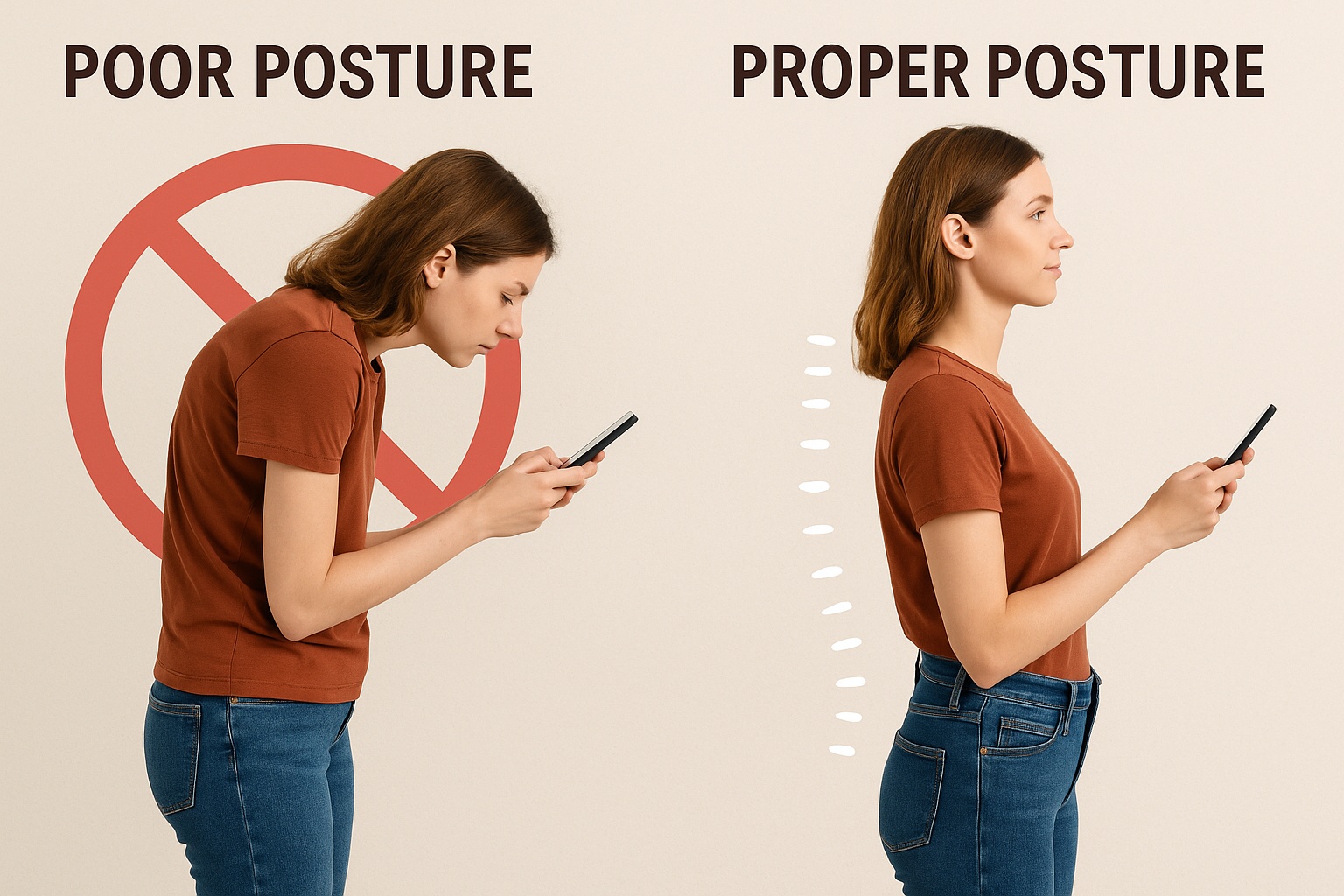
In today’s world, it’s easy to fall into the habit of slouching—hours at a desk, scrolling on our phones, or collapsing onto the couch at the end of the day. Over time, poor posture becomes the norm. But it doesn’t have to be. Standing tall isn’t just about looking confident—it actually helps you feel more energized, focused, and in control of your body.
When your posture is in alignment, your muscles work more efficiently, reducing fatigue and strain. You breathe better. You move better. And yes, you even project more confidence in the way you walk into a room. Think of it as hitting the reset button on your body. The good news? You can make big changes with small, simple exercises—no equipment or gym membership required.
Let’s dive into 10 easy moves that can help you straighten up, ease pain, and build a posture you’ll be proud of.

1. Wall Angels
Wall Angels are a great way to reset your posture and remind your body what “aligned” feels like.
How to do it:
- Stand with your back flat against a wall—heels about 6 inches away.
- Make sure your head, upper back, and lower back are touching the wall.
- Bring your arms up into a “W” shape, elbows bent, and hands about shoulder height.
- Slowly slide your arms up into a “Y” shape, then back down to “W.”
- Do 10–15 slow, controlled reps.
Why it works:
Wall Angels help strengthen the muscles in your upper back and shoulders—exactly the ones you need to stay upright. If you sit a lot, this is the antidote.
2. Chest Openers
If your shoulders are constantly rounding forward, your chest muscles might be too tight. Chest openers help fix that.
How to do it:
- Stand tall with your feet shoulder-width apart.
- Extend your arms out to the sides at shoulder height, palms facing forward.
- Gently pull your shoulder blades together like you’re trying to hold a pencil between them.
- Hold for 3–5 deep breaths, then relax. Repeat a few times.
Why it works:
Tight chest muscles pull your posture forward. This stretch opens you up—literally—helping your shoulders fall naturally back where they belong.
3. Plank Variations
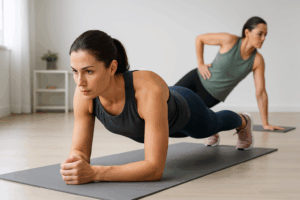
A strong core is key to holding good posture all day. Planks build that foundation fast.
How to do a basic plank:
- Get on the floor, resting on your forearms and toes.
- Keep your body in a straight line—no sagging or lifting.
- Hold for 30–60 seconds, or as long as you can, while keeping good form.
Want to switch it up? Try side planks or planks with shoulder taps to challenge your balance and keep your core working from all angles.
Why it works:
Your core supports your spine. Strengthening it helps you sit, stand, and move with control and confidence.
4. Seated Torso Twists
This is a simple, feel-good move you can do right at your desk—and it works wonders for your spine.
How to do it:
- Sit tall in a sturdy chair, feet flat on the floor.
- Place your right hand on the outside of your left knee.
- Gently twist your torso to the left, keeping your back straight and shoulders relaxed.
- Hold for a few deep breaths, then switch sides.
Why it works:
Torso twists increase mobility in your spine and relieve stiffness—especially helpful if you’re sitting for long periods. It’s a gentle reminder to move your body and stay aligned.
5. Shoulder Blade Squeezes
If you feel like you’re constantly slouching, this exercise helps pull your shoulders back where they belong.
How to do it:
- Sit or stand tall with arms by your sides.
- Squeeze your shoulder blades together like you’re trying to pinch something between them.
- Hold for 3–5 seconds, then release.
- Repeat 10–15 times.
Why it works:
This move strengthens the postural muscles in your upper back, helping undo that forward-shoulder posture most of us get from phone and laptop use.
6. Chin Tucks
This tiny move makes a big difference, especially if you deal with tech neck or tension headaches.
How to do it:
- Sit or stand upright with your shoulders relaxed.
- Gently tuck your chin straight back (like you’re trying to give yourself a double chin).
- Keep your head level—don’t tilt up or down.
- Hold for 5 seconds, then release.
- Do 10 reps twice a day.
Why it works:
Chin tucks help realign your head over your shoulders and strengthen the deep neck muscles. You’ll look and feel more balanced—and reduce pressure on your neck and spine.
7. Standing Forward Bend
This calming stretch is perfect for releasing tension in your spine and hamstrings after a long day.
How to do it:
- Stand with your feet hip-width apart.
- Inhale and reach your arms overhead.
- As you exhale, hinge at the hips and fold forward, letting your arms and head hang.
- Keep a slight bend in your knees if needed.
- Breathe deeply and hold for 20–30 seconds.
Why it works:
This stretch gently decompresses the spine, relieves lower back tension, and improves flexibility—all essential for better posture.
8. Bird-Dog
This is a fantastic core and back stabilizer that also improves balance and coordination.
How to do it:
- Start on all fours, hands under shoulders and knees under hips.
- Extend your right arm forward and your left leg back, keeping both parallel to the ground.
- Hold for a few seconds, then return to start and switch sides.
- Do 8–10 reps per side.
Why it works:
Bird-Dogs strengthen the deep core and back muscles that help keep your spine stable and aligned during everyday movements. It’s great for building body awareness too.
9. Glute Bridges
Weak glutes can pull your pelvis out of alignment and contribute to poor posture. This exercise helps fix that.
How to do it:
- Lie on your back, knees bent, feet flat on the floor, arms by your sides.
- Press through your heels to lift your hips toward the ceiling.
- Squeeze your glutes at the top, then lower slowly.
- Do 2–3 sets of 10–15 reps.
Why it works:
Glute bridges strengthen the hips and lower back while encouraging a neutral spine. This creates a strong, stable base to support your posture.
10. Thoracic Extensions Over a Foam Roller
This one is excellent for countering a rounded upper back (kyphosis), especially if you sit a lot.
How to do it:
- Lie on your back with a foam roller placed horizontally under your upper back.
- Support your head with your hands and gently arch over the roller, opening your chest.
- Pause, then return to neutral. Move the roller slightly up or down your spine and repeat.
- Do this for 1–2 minutes.
Why it works:
Thoracic extensions improve upper back mobility and help reverse the “hunched” posture caused by daily sitting and screen time.
Embrace the Power of Posture
Improving your posture isn’t about being perfect—it’s about being consistent. These ten exercises aren’t just about standing taller (though that’s a nice bonus). They help you feel stronger, move with less pain, and carry yourself with more confidence.
Start by picking just 2 or 3 of these moves each day. Rotate them, build a habit, and notice how your body responds. With just a few minutes of mindful movement, you can start reversing years of tension and misalignment.
You’ve got everything you need to reset your posture and reclaim your presence.